Kraków – a 3-day guide plus the Wieliczka Salt Mine
What to see in Kraków – Wawel and the Dragon's Den, the Main Market Square, Kazimierz, Lady with an Ermine and the Wieliczka Salt Mine. Itinerary and tips.
- Best time to visitMay – September, and December for the Christmas market
- Suggested stay3–4 days
- Getting thereconnecting flight, or by road via Budapest (~1,200 km from Sofia)
Kraków is Poland’s former royal capital and one of the few major Polish cities that came through the Second World War almost undamaged. The Old Town and Wawel were among the very first UNESCO World Heritage Sites (1978). Here you’ll find a medieval square, a royal castle, a dragon legend, a lively Jewish quarter and one of Europe’s most impressive underground sights – the Wieliczka Salt Mine.
Wawel Hill
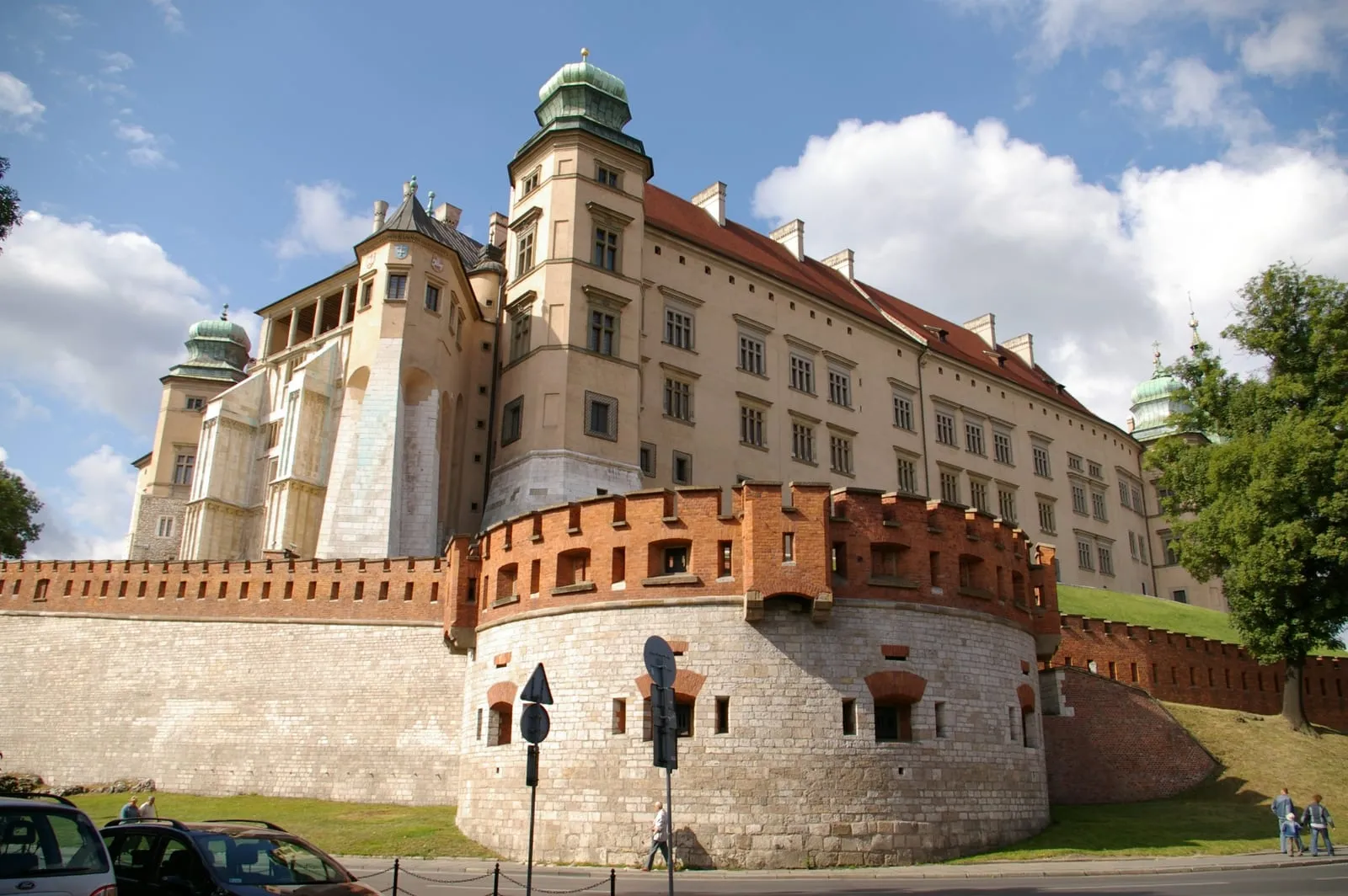
- The Royal Castle – residence of the Polish kings. See the arcaded Renaissance courtyard, the state rooms with Flemish tapestries and the treasury.
- Wawel Cathedral – where Polish kings were crowned and buried. National heroes and poets also rest in its crypts. Climb the tower to see the Sigismund Bell.
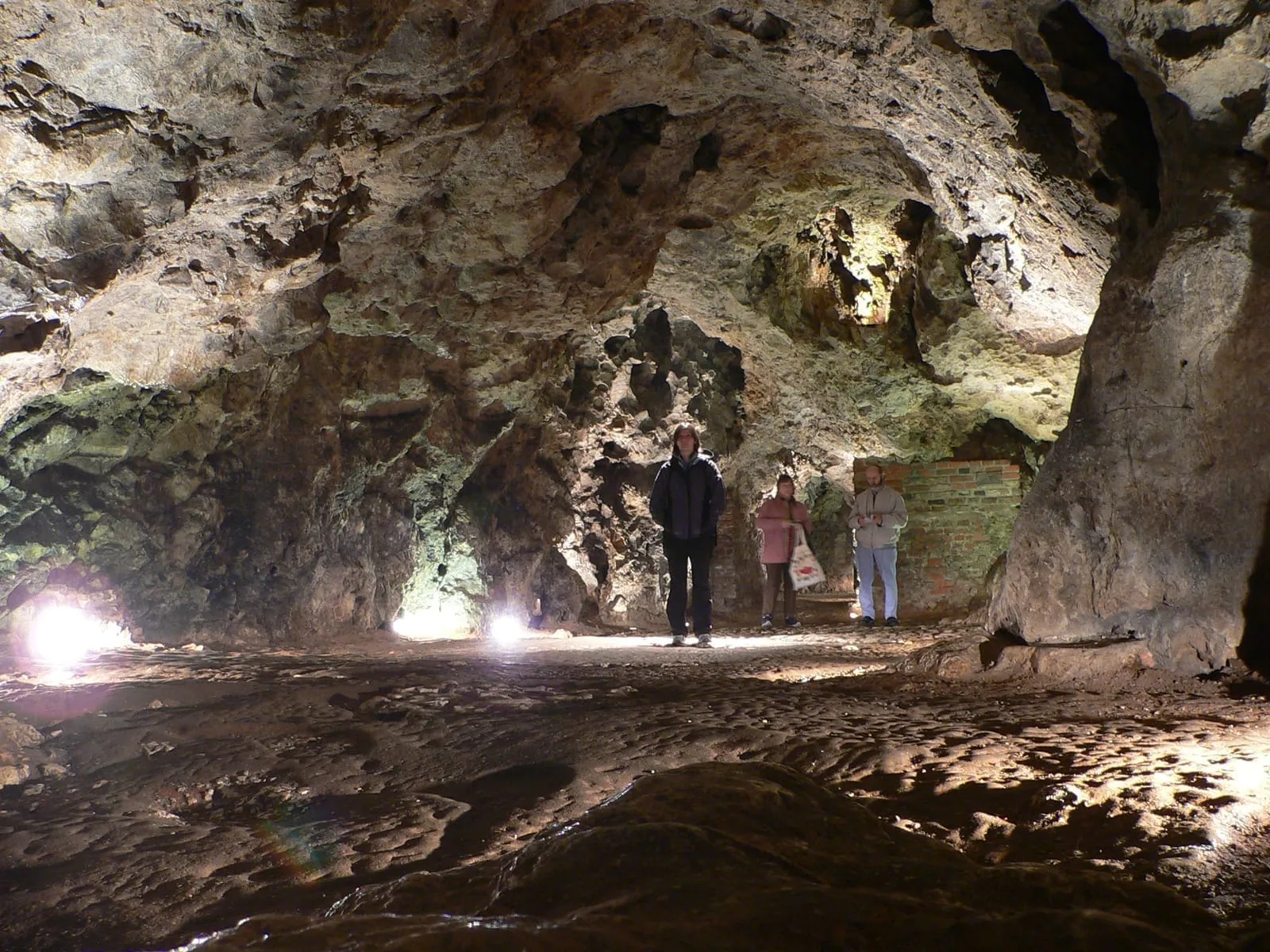
- The Dragon’s Den (Smocza Jama) – legend says a dragon lived under the hill. A shepherd boy named Skuba defeated it by feeding it a sheep stuffed with sulphur. You walk down through the cave and come out on the bank of the Vistula, where a bronze dragon breathes fire every few minutes. Kids love it.
The Old Town
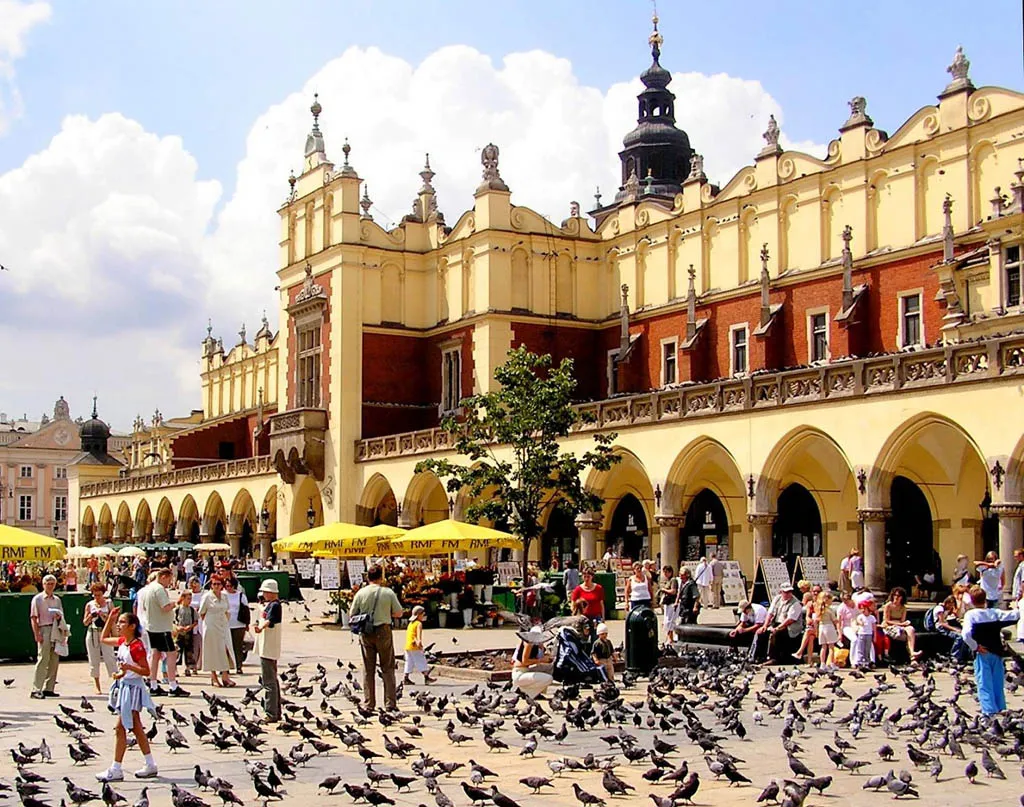
- The Main Market Square (Rynek Główny) – one of the largest medieval squares in Europe (about 4 hectares). In the middle is the Cloth Hall (Sukiennice), a Renaissance trading hall with amber and souvenir stalls and a gallery of Polish painting upstairs.
- St Mary’s Basilica – home to Veit Stoss’s Gothic altarpiece, the largest carved altarpiece in Europe. Every hour a trumpeter plays the Hejnał from the tower. The tune stops abruptly in memory of a 13th-century trumpeter struck by a Tatar arrow.
- The Jagiellonian University – founded in 1364, one of the oldest in Central Europe; Nicolaus Copernicus studied here. Visit the Collegium Maius courtyard.
- The Czartoryski Museum – home to Leonardo da Vinci’s Lady with an Ermine, one of only four portraits of women he painted.
- St Florian’s Gate and the Barbican – remains of the medieval city walls.
Kazimierz
Once a Jewish town, Kazimierz is now a bohemian quarter of synagogues, galleries, cafés and bars. Scenes from Schindler’s List were filmed here. Across the river in Podgórze is Oskar Schindler’s factory, now a museum about Kraków under occupation.
The Wieliczka Salt Mine
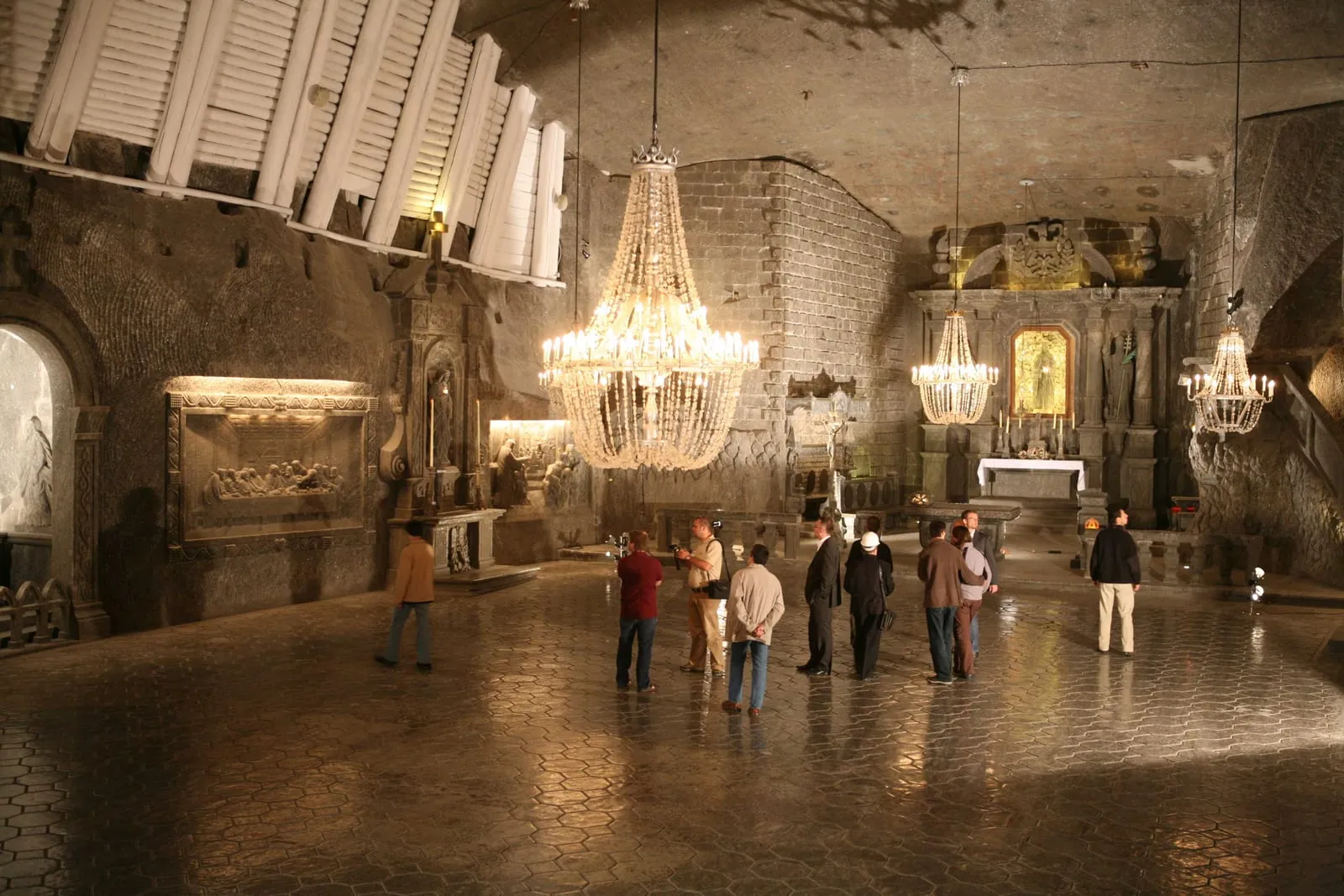
About 15 km from Kraków, salt has been mined at Wieliczka since the 13th century. The mine has more than 300 km of tunnels on nine levels, down to 327 m. The tourist route leads past underground lakes, halls and chapels carved entirely from salt. The highlight is St Kinga’s Chapel, with chandeliers of salt crystals and reliefs cut into the walls. Visits are guided and take about 3 hours. Bring a jacket – it’s around 14 °C inside.
Sample 3-day itinerary
Day 1. The Main Square, Cloth Hall, St Mary’s Basilica (hear the Hejnał at noon) and the university. Pierogi for dinner.
Day 2. Wawel – the castle, cathedral and Dragon’s Den. Kazimierz and Schindler’s Factory in the afternoon.
Day 3. The Wieliczka Salt Mine in the morning. The Czartoryski Museum or a walk along the Vistula in the afternoon.
Extra day: the Auschwitz-Birkenau Memorial and Museum in Oświęcim (about 1 h 15 min away). Book a free or paid tour in advance. It’s a heavy but important experience, and not suitable for young children.
Getting there
By air – connecting flights from Sofia (via Warsaw, Vienna or other hubs). Kraków-Balice Airport is about 20 minutes from the centre by train. Check for seasonal direct flights too.
By bus or car – the old programme went via Budapest on the way out and Bratislava and Vienna on the way back. That makes a great 5-day, four-capital trip. Sofia to Kraków is about 1,200 km.
When to visit
May–September is warmest and liveliest. December is magical, with the Christmas market on the Main Square. Winter is cold, often below freezing. Spring and autumn are quieter and cheaper.
Practical tips
- The currency is the Polish złoty (PLN). Cards are accepted almost everywhere.
- Food and transport cost less than in Western Europe.
- Try pierogi (dumplings), żurek (sour rye soup served in bread) and obwarzanek, the ring-shaped bread sold on street corners.
- Book Wieliczka and Auschwitz online, especially in summer.
FAQ
How many days do I need in Kraków? Three days cover the city and Wieliczka. Add a fourth for Auschwitz.
Can I combine it with other cities? Yes. Budapest, Bratislava, Vienna and Prague are all within a few hours. See Prague and Vienna.
Photos
Updated: November 2026
More places nearby
-
 Czech Republic
Prague – a 3 to 5 day travel guide
What to see in Prague – the Castle, Charles Bridge, the Old Town, a Vltava cruise, Czech beer and day trips to Karlštejn and Kutná Hora.
-
 Austria
Vienna – a 3 to 4 day guide to palaces, museums and coffee houses
What to see in Vienna – the Hofburg, St Stephen's, Schönbrunn, the Belvedere, the Prater, Hundertwasser, coffee houses and the Christmas markets.
-
 Czech Republic
A Czech road trip – Prague, Karlštejn, Český Krumlov, Brno and Karlovy Vary
An 8-day Czech road trip – castles around Prague, České Budějovice, Český Krumlov, Brno, Lednice, Plzeň and the spa town of Karlovy Vary.
-
 Germany
Bavaria by train – Munich, Nuremberg and Würzburg
A Bavarian rail journey – Munich, medieval Nuremberg and its Imperial Castle, and Würzburg with the Residence and Marienberg Fortress. A 4-day itinerary.