Ohrid and Lake Ohrid – a weekend in North Macedonia
A guide to Ohrid – St John at Kaneo, Samuel's Fortress, Plaošnik, St Sophia, St Naum Monastery, Struga and a stop in Skopje on the way.
- Best time to visitMay – October
- Suggested stay2–3 days
- Getting there~400 km from Sofia via Gyueshevo, about 6 h
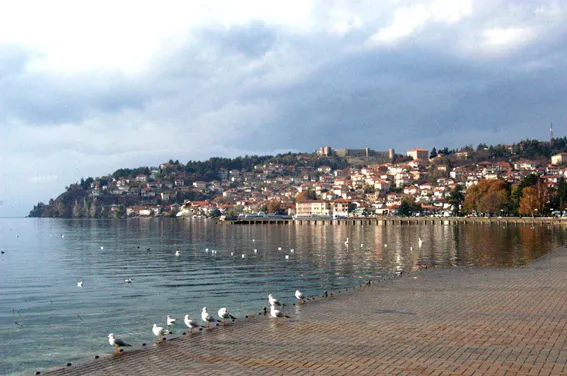
Ohrid is the town of St Clement and St Naum – disciples of Cyril and Methodius who founded the Ohrid Literary School here in 886. The town once had “365 churches, one for every day of the year”. Lake Ohrid is one of the oldest lakes in Europe, more than a million years old. The town and the lake are on the UNESCO list for both their natural and cultural heritage. Ohrid is steeped in history and also makes a lovely lakeside weekend.
What to see in Ohrid
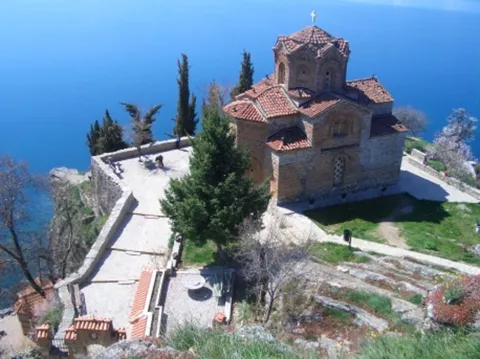
- St John at Kaneo – the little 13th-century church on a rock above the water, the most famous view in North Macedonia. Reach it along a shoreline path from the old town.
- Samuel’s Fortress – on the hill above town, with views of the whole lake.
- Plaošnik – the site of St Clement’s monastery, with the rebuilt Church of St Clement and St Panteleimon and early Christian mosaics.
- St Sophia – the cathedral of the Archbishopric of Ohrid, with 11th-century frescoes.
- The ancient theatre – Hellenistic, still used for summer festivals.
- The old town – cobbled lanes, houses with overhanging upper floors, and workshops making Ohrid pearls.
St Naum Monastery
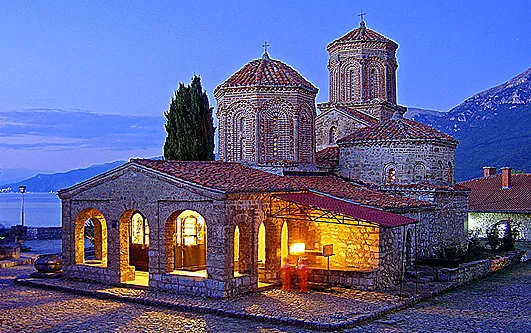
About 30 km south of Ohrid, near the Albanian border, is St Naum Monastery, founded by St Naum himself in 905. This is where springs feed the lake, and you can take a rowing boat along the quiet spring streams. Peacocks wander the monastery grounds.
Struga
Fifteen km north is Struga, where the Black Drin river flows out of the lake. The town is known for the international Struga Poetry Evenings festival.
Skopje on the way
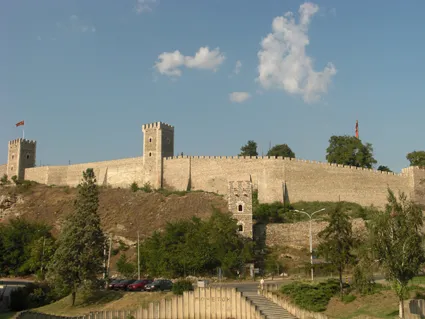
The road from Sofia passes through the capital, Skopje. Stop for 2–3 hours: the Stone Bridge over the Vardar, Kale Fortress, the Old Bazaar with its mosques, inns and kebab houses, the Mother Teresa Memorial House, and the many new monuments of the “Skopje 2014” project.
Three-day itinerary
- Sofia – Gyueshevo – Kriva Palanka – Skopje (a walk) – Ohrid. Dinner by the lake.
- Walking tour of Ohrid – Kaneo, Plaošnik, the fortress and St Sophia. St Naum in the afternoon.
- Struga, then back to Sofia.
Getting there
By car – via the Gyueshevo–Deve Bair border, Kriva Palanka, Kumanovo and Skopje. About 400 km and 6 hours. By bus – there are services to Skopje and Ohrid.
Practical tips
- The currency is the Macedonian denar (MKD), though many places accept euros.
- North Macedonia isn’t in the EU, so mobile data can be expensive without a roaming package.
- The lake is home to the endemic Ohrid trout, a protected species. Order other fish in restaurants.
Photos
Updated: November 2026
More places nearby
-
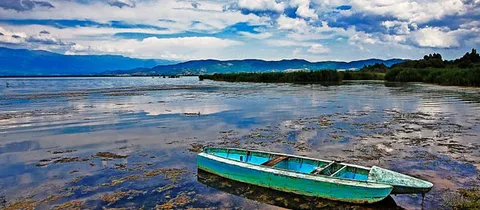 North Macedonia
Lake Dojran and Strumica – a day trip
A day trip to Lake Dojran with its traditional cormorant fishing, Strumica and the Vodoča and Veljusa monasteries, plus Samuel's Fortress and Rupite on the way back.
-
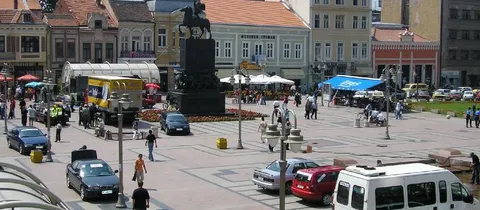 Serbia
Niš – birthplace of Constantine the Great, Mediana and the Skull Tower
A day trip to Niš – the Roman residence at Mediana, Niš Fortress, the Skull Tower, Serbian food and Sukovo Monastery on the way back.
-
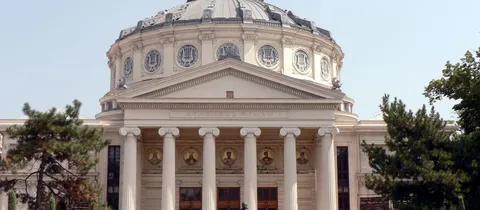 Romania
Bucharest and the rock monasteries near Ruse – north of the Danube
A weekend route – the Ivanovo rock churches and Basarbovo Monastery near Ruse, then Bucharest – the Palace of Parliament, Athenaeum, Old Town and Village Museum.
-
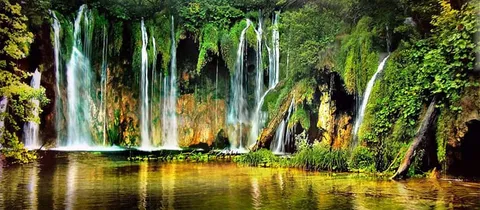 Croatia
 – Zagreb, the Plitvice Lakes and Dubrovnik
A 6-day Croatia route – Zagreb's Upper Town, the waterfalls of the Plitvice Lakes, Split and the walls of Dubrovnik, "the pearl of the Adriatic".