Jordan – Petra, Wadi Rum, the Dead Sea and the Red Sea in 6 days
A route through Jordan – Amman, Jerash, Madaba, Mount Nebo, Karak, Petra, the Wadi Rum desert, Aqaba and the Dead Sea. Getting there, Jordan Pass and tips.
- Best time to visitMarch – May and October – November
- Suggested stay6–8 days
- Getting thereconnecting or seasonal direct flight to Amman (~2 h 45 min)
Jordan is a small country with an enormous heritage. It has the rose-red city of Petra, one of the New Seven Wonders of the World, the Martian landscapes of Wadi Rum, the best-preserved Roman city in the Middle East, the Dead Sea and the coral reefs of the Red Sea. Jordanians are famously hospitable, and the country is one of the calmest in the region – all less than 3 hours’ flight from Bulgaria.
Amman and Jerash
Amman is a modern capital spread over seven hills. Visit the Citadel, with the ruins of the Roman Temple of Hercules and an Umayyad palace, and the 2nd-century Roman Theatre, which seats 6,000.
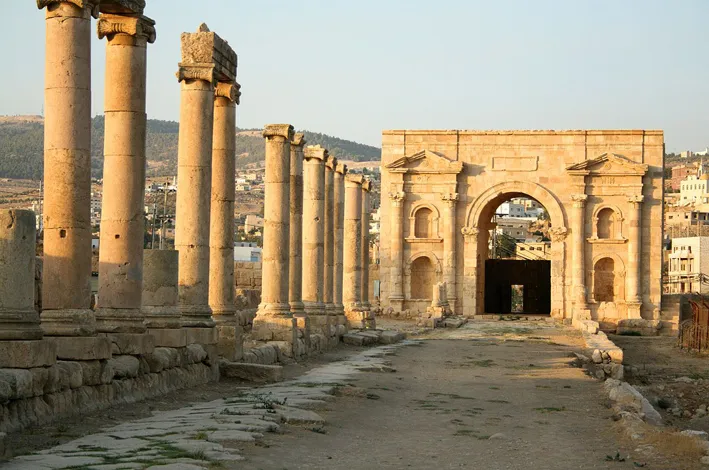
Jerash (ancient Gerasa), about 50 km north of Amman, is one of the best-preserved Roman cities outside Italy. Enter through Hadrian’s Arch, pass the hippodrome and reach the colonnaded Oval Plaza. From there, walk the columned main street (the Cardo) to the temples of Zeus and Artemis.
Madaba, Mount Nebo and Karak
South along the ancient King’s Highway:
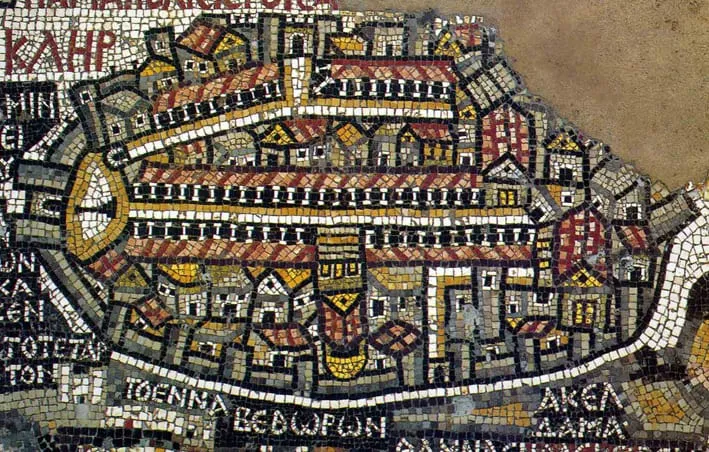
- Madaba, the “City of Mosaics” (about 30 km from Amman). St George’s Greek Orthodox Church holds the 6th-century mosaic map of the Holy Land. Made from more than two million stones, it shows Jerusalem, the Jordan River and the Dead Sea.
- Mount Nebo – where, according to the Bible, Moses saw the Promised Land. The Byzantine church on the summit has beautiful floor mosaics. On a clear day you can see the Dead Sea, the Jordan Valley and even Jerusalem.
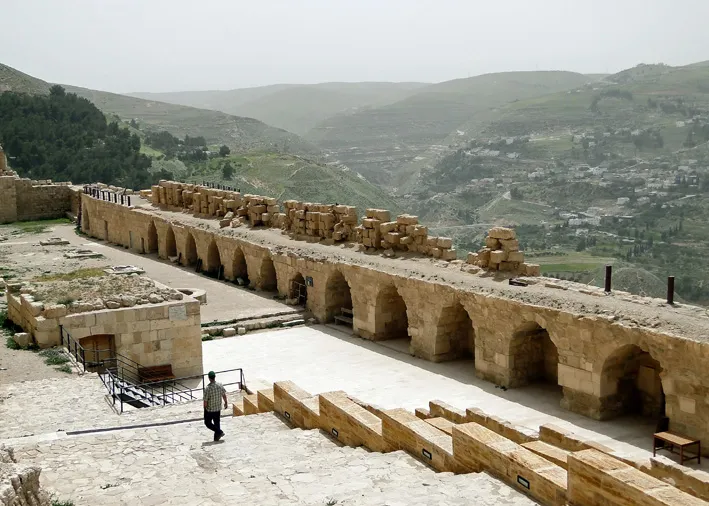
- Karak – a huge 12th-century Crusader castle with multi-level underground halls. It was once held by the notoriously cruel Raynald of Châtillon, who raided caravans heading to Mecca. Saladin later besieged and took it.
On the way you pass the spectacular Wadi Mujib canyon, the “Grand Canyon of Jordan”.
Petra
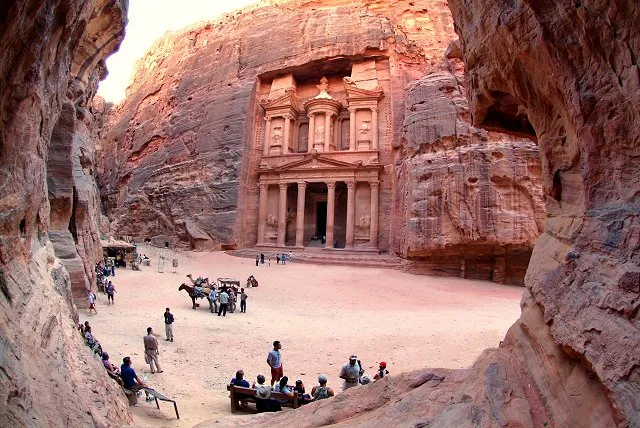
Petra was the capital of the Nabataeans, carved into rose-coloured sandstone around 2,000 years ago. The outside world rediscovered it in 1812, when the Swiss traveller Johann Ludwig Burckhardt entered disguised as an Arab merchant. Today it’s a UNESCO site and, since Indiana Jones and the Last Crusade, a global star.
- The Siq – a narrow canyon about 1.2 km long that ends suddenly in front of the Treasury (Al-Khazneh).
- The Street of Facades, the Theatre and the Royal Tombs.
- The Monastery (Ad-Deir) – even bigger than the Treasury, up about 800 steps. The climb takes about 45 minutes and is well worth it.
- Petra by Night – on certain evenings the Siq and Treasury are lit by candles.
Allow at least one full day, ideally two. Start early, before the heat and the tour groups.
Wadi Rum
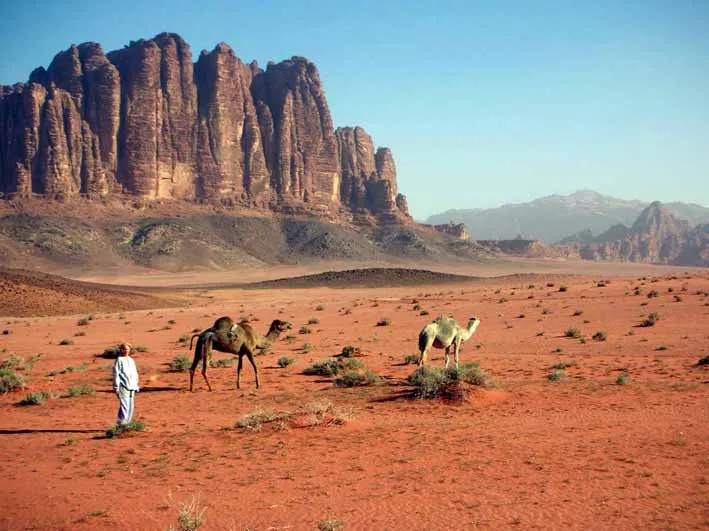
Wadi Rum, the “Valley of the Moon”, is a desert of red sand and towering rock massifs. Lawrence of Arabia and the Bedouin lived here, and The Martian and Dune were filmed here. Take a jeep tour, ride a camel, climb a sand dune and stay overnight at a Bedouin camp – the starry sky is unforgettable.
Aqaba and the Red Sea
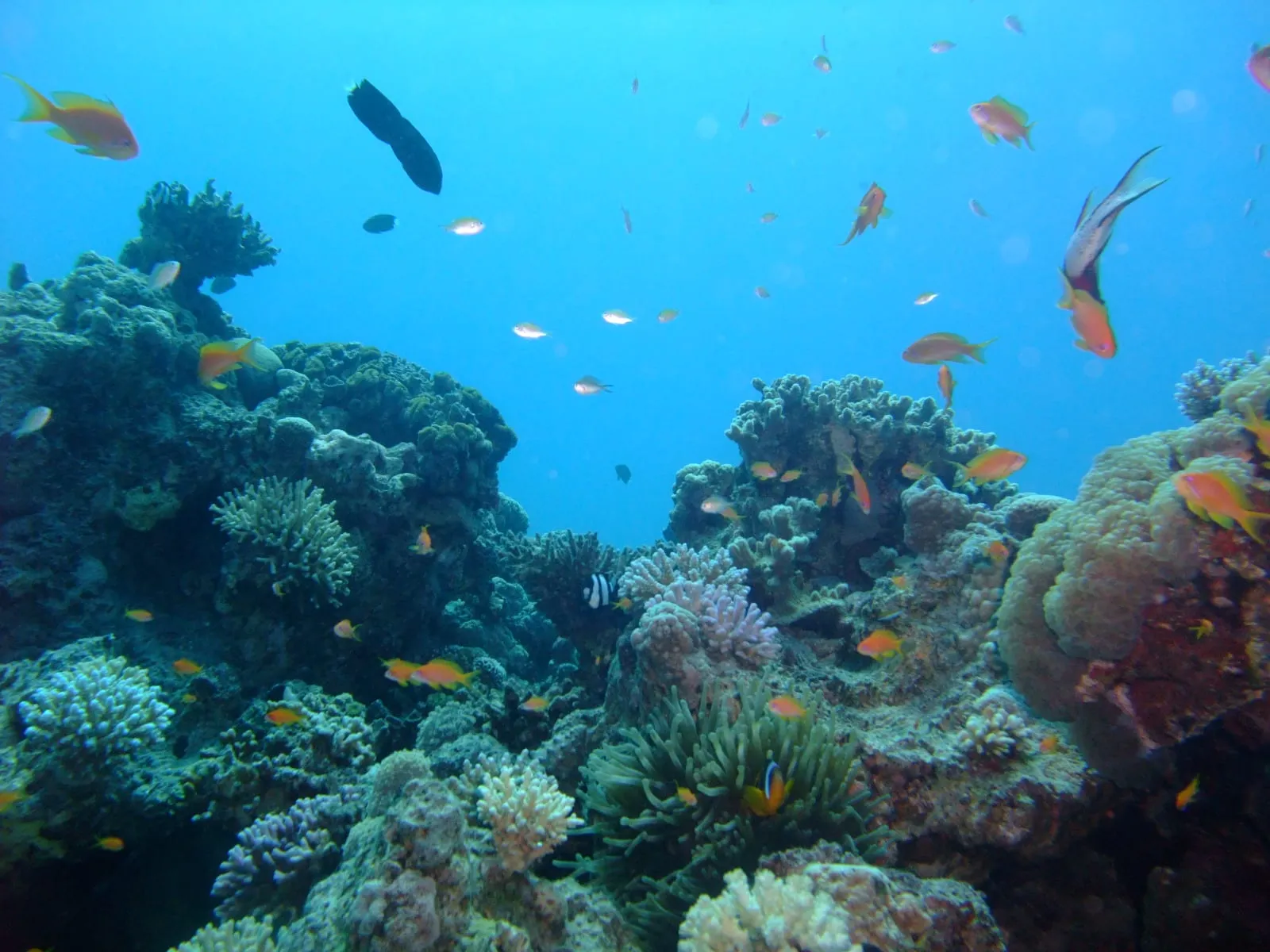
Aqaba is Jordan’s only coastal city. The Red Sea is warm all year, and the coral reefs off the shore are excellent for diving and snorkelling – colourful fish, coral and even shipwrecks. It’s a perfect place to unwind after Petra and Wadi Rum.
The Dead Sea
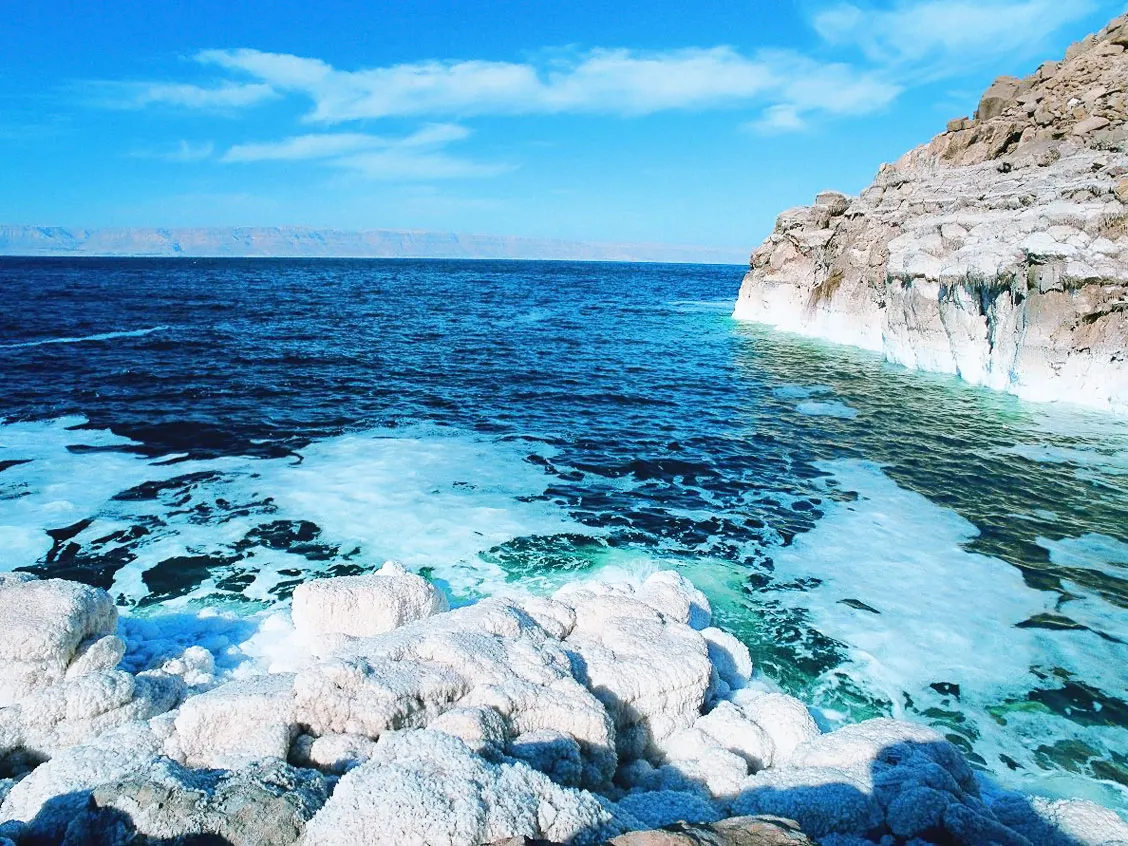
The Dead Sea is the lowest point on land, about 430 m below sea level. The water is so salty you can’t sink. Cover yourself in black mud and float on the surface. Resort hotels with pools and spas line the shore. Nearby is Bethany beyond the Jordan (Al-Maghtas), the site of the Baptism of Christ and a UNESCO site.
Sample 6-day itinerary
- Arrive in Amman. An evening walk downtown.
- Amman – Madaba – Nebo – Karak – Petra. Mosaics, the view from Nebo and the Crusader castle.
- Petra. A full day – the Siq, the Treasury and the Monastery.
- Petra – Wadi Rum. A jeep tour and a night at a Bedouin camp.
- Aqaba – diving or a beach day.
- The Dead Sea and Bethany beyond the Jordan, then back to Amman in the evening (or add day 7 for Jerash).
Getting there and around
By air – flights from Sofia to Amman run via Istanbul and other hubs, sometimes with seasonal direct flights. Queen Alia Airport is about 35 km from the centre.
Visa and Jordan Pass – you can get a visa on arrival, but the online Jordan Pass is better value. It covers the visa fee (if you stay at least 3 nights) and entry to Petra, Jerash, Wadi Rum and 40 more sites.
Getting around – rent a car (roads are good and distances short) or hire a driver. JETT buses link Amman, Petra and Aqaba.
When to visit
Spring (March–May) and autumn (October–November) are ideal. Summer is very hot, especially in Petra, Wadi Rum and at the Dead Sea. Winter is cool, and Amman sometimes sees snow, but Aqaba stays warm.
Practical tips
- The currency is the Jordanian dinar (JOD). Carry some cash for small shops and tips.
- Dress modestly, especially outside resorts, with shoulders and knees covered.
- Bring good shoes, a hat, sunscreen and plenty of water for Petra.
- During Ramadan, many restaurants close during the day.
FAQ
Is Jordan safe? Jordan is one of the most stable countries in the region. Still, check official travel advice before you go.
Can I combine it with Israel? Yes, there are land border crossings. See Jerusalem and the Holy Land.
Photos
Updated: November 2026