Travelling abroad with kids – when, where and how
A practical guide to travelling abroad with children – the right age, child-friendly cities, how to plan the route and what documents you need.
For children, holidays are colourful, carefree and always too short. For parents they can be a real puzzle. Travelling abroad is one of the best ways to spend that time together and see the world through a child’s eyes. If borders don’t scare you, plan carefully around three questions: when, where and how.
When are kids ready for a trip abroad?
There’s no strict rule, but 8–9 years is a good age for a first longer trip with sightseeing. At that age, children:
- are easier to organise and listen better;
- remember what they see and can talk about it;
- look after themselves and cope with longer journeys;
- often already learn a foreign language and can try it out.
You can travel with younger children too, but with a different goal: beaches, nature, parks. Don’t plan museums and city tours. Whatever their age, be honest about whether your child is ready for a fun but completely new adventure.
When in the year
- Late June and early September – warm but not hot, with fewer crowds and lower prices.
- Autumn and spring school breaks – ideal for short city trips.
- July and August – best for the beach. Southern European cities are very hot and crowded.
- Christmas – the markets in Vienna, Prague and Germany are magical for kids.
Where – cities that love children
In theory, anywhere. In practice, some cities are child-friendly, while others are rich in culture but exhausting for little ones. Dragging a child around churches and ruins in Rome at 40 °C, or through the Sistine Chapel queue, is cruel.
Good choices:
- Vienna – the Prater amusement park with its famous Ferris wheel, Schönbrunn Zoo (one of the oldest in the world), the Technical Museum, and the children’s tour of Schönbrunn Palace, where kids can dress up as princes and princesses.
- Paris – Disneyland, and nearby Parc Astérix with its water rides. The Cité des Sciences is a full day of fun.
- Barcelona – Gaudí’s Park Güell feels like a fairy tale, with gingerbread-like houses, a serpentine bench and a colourful lizard. The aquarium is huge.
- Prague – boat trips on the Vltava, Petřín Hill with its tower and mirror maze, and the Toy Museum.
- Germany and Austria – castles such as Neuschwanstein, and knights’ festivals.
Medieval and knights’ festivals. Every summer Europe hosts hundreds of these, with jousting, fairs and crafts. They’re usually in small towns near the big tourist centres. A good example is the Medieval Festival in Svetvinčenat, Istria (Croatia).
Museums for kids. Look for hands-on science and technology museums where you’re allowed to touch everything and guides encourage questions. Then a museum stops being a mystery behind glass.
How to plan the trip
Build anticipation. Tell your child what they’ll see. Show photos, a short video, a map. You’ll be their guide to a new world, so prepare well.
Start close to home. Before going abroad, take a few short trips in your own country to build good travel habits:
- bring one or two favourite toys, not all of them;
- this is your bag and you’re in charge of it;
- hotels and museums have their own rules.
Avoid “7 cities in 5 days”. Tours like that are exhausting and boring for kids. An independently planned trip with time for rest and play works much better. Children’s attention spans are short, so move through some sights faster if your child isn’t interested.
Be careful with exotic destinations. Children don’t have the instinct to avoid danger, the climate is tougher, and the culture shock is bigger.
Don’t hide away in all-inclusive resorts. A holiday works when there are new experiences and variety. Otherwise you get crying kids and frazzled parents.
Budget. Plan to spend almost as much on a child as on an adult. There are discounts, but also more temptations. Look for family tickets at museums and city cards that bundle transport and entry.
Documents and insurance
- ID for every child. Within the EU, children can usually travel with a national ID card or passport. Outside the EU they need a passport.
- Consent from the other parent. If a child travels with only one parent or with another adult, many countries require a notarised consent letter from the absent parent (or both parents). Check the current rules for your country and destination before travelling.
- Health insurance. The European Health Insurance Card (EHIC) covers only necessary care in public facilities. Get additional travel insurance for the whole family.
- Medicines. Pack a kit for fever, upset stomachs and allergies, plus prescriptions for any regular medication.
Pre-trip checklist
- IDs and consent letters
- Insurance and copies of documents (on your phone and on paper)
- First-aid kit
- Chargers, headphones, plug adapter
- Snacks and water for the journey
- A small backpack for your child with their own things
- Route map or app with offline maps
Remember that abroad you’ll be parents as well as tourists. A well-planned trip will stay in your child’s memory for a lifetime.
Travel tips
-
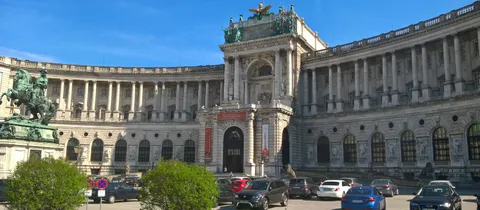
Three architecture walks in Vienna – from Gothic to the Ringstrasse
Self-guided architecture walks in Vienna – St Stephen's and the Baroque churches, the Belvedere and Karlskirche, and the Ringstrasse from the Opera to the City Hall.
-

Vienna 1900 – Klimt, Schiele, the Secession, Freud and the Fools' Tower
A walk through fin-de-siècle Vienna – the Secession Building and the Beethoven Frieze, Otto Wagner and Adolf Loos, the Freud Museum and the Fools' Tower (Narrenturm).
-
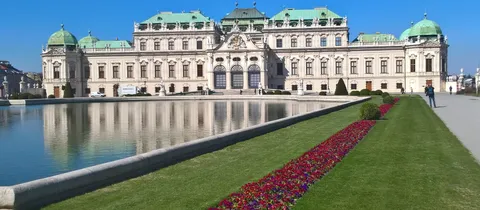
Vienna for art lovers – the museums you shouldn't miss
Vienna's museums – the Belvedere and Klimt's The Kiss, the Kunsthistorisches Museum, the Albertina, the Leopold and Schiele, the Secession and the MAK. How to plan them.