Three architecture walks in Vienna – from Gothic to the Ringstrasse
Self-guided architecture walks in Vienna – St Stephen's and the Baroque churches, the Belvedere and Karlskirche, and the Ringstrasse from the Opera to the City Hall.
Vienna is a textbook of European architecture – Gothic, Baroque, Historicism and modernism, all packed into a few square kilometres. The best way to “read” it is on foot. Here are three self-guided walks of 1 to 3 hours each. Do them on different days or combine them.
Walk 1: From Gothic to Baroque – Vienna’s churches
Time: about 2 hours, with 15 minutes of walking.
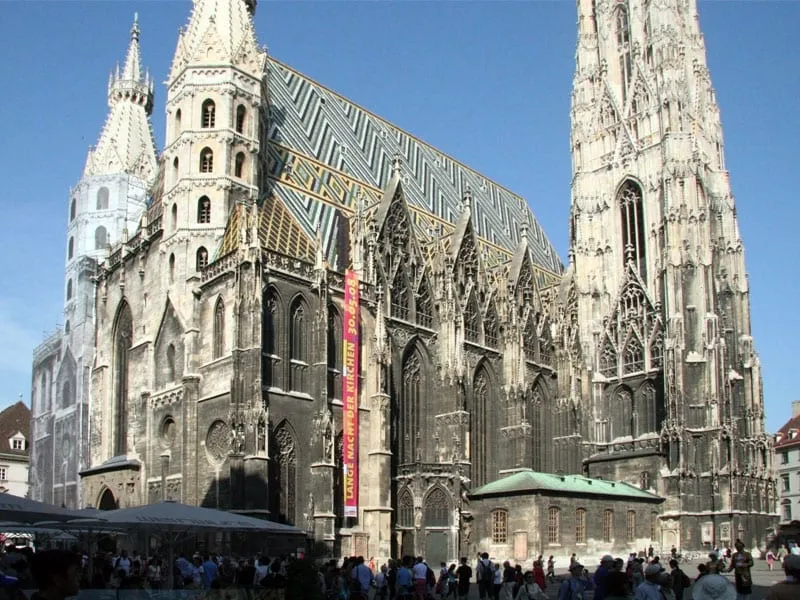
- St Stephen’s Cathedral – Austria’s most famous Gothic building, with its 136 m south tower and patterned tiled roof showing the imperial eagles. Look at the stone pulpit – the master carver Anton Pilgram portrayed himself peering out of a little window – and visit the catacombs. The cathedral mirrors medieval faith: relic worship, craft guilds and fear of the Last Judgement.
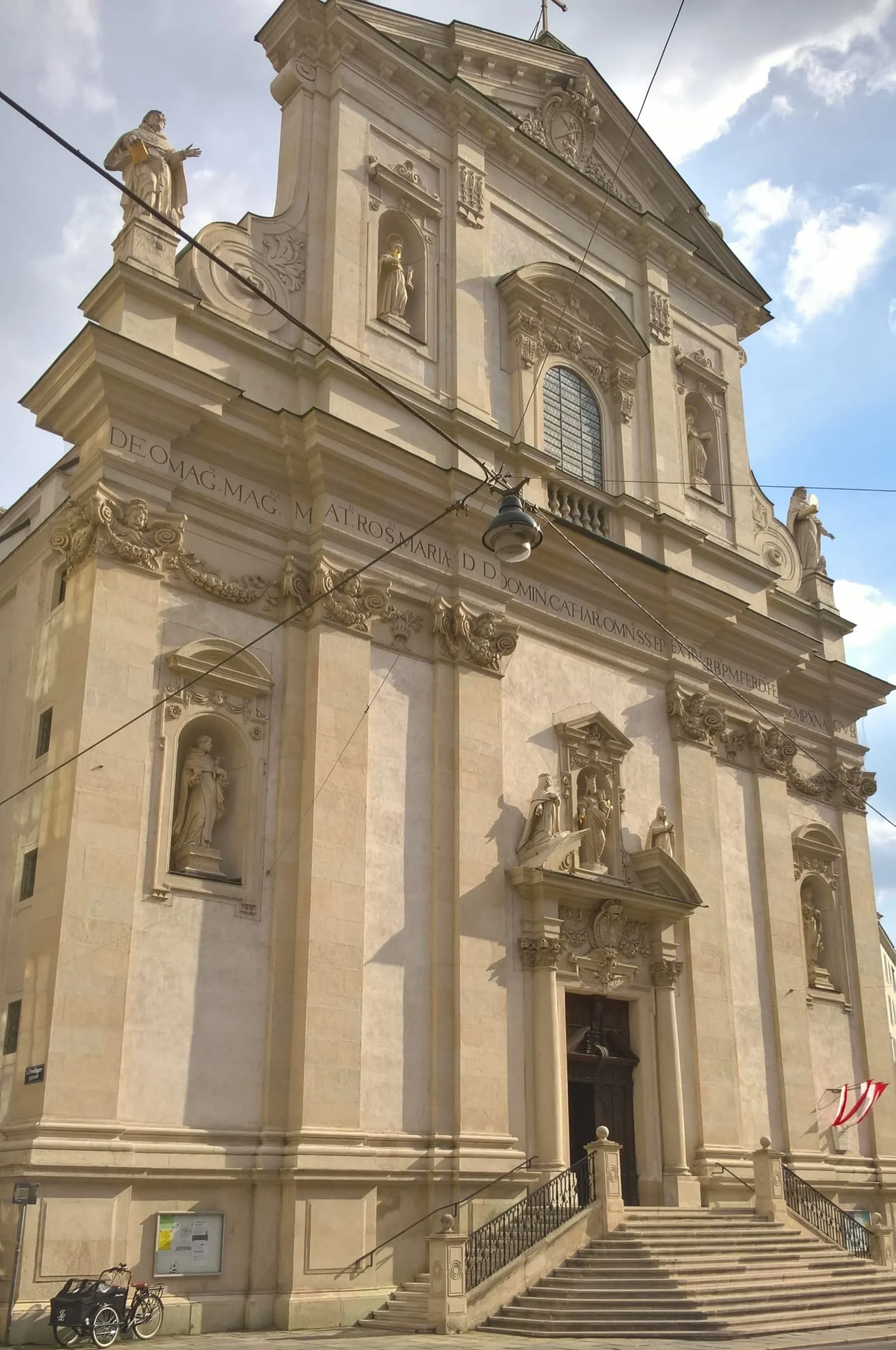
- The Dominican Church – about 10 minutes’ walk away. Early Baroque, Italian-inspired and rich with stucco.
- The Jesuit (University) Church – with a fake dome painted on the flat ceiling by Andrea Pozzo. Stand on the marked spot on the floor to see the illusion.
The Baroque churches are products of the Counter-Reformation, when Jesuits and Dominicans halted the spread of Protestantism with education, preaching and art designed to move the emotions.
Walk 2: Wonders of the Baroque – the Belvedere and Karlskirche
Time: about 2–3 hours, with 30–40 minutes of walking and steps in the garden.
- The Upper Belvedere – the palace of Prince Eugene of Savoy, later bought by Empress Maria Theresa. Called “the wonder of Europe”, it has every element of a Baroque princely residence: lavish buildings, grand staircases and a French-style garden.
- The garden – walk down the steps past the fountains and the putti of the months to the Lower Belvedere.
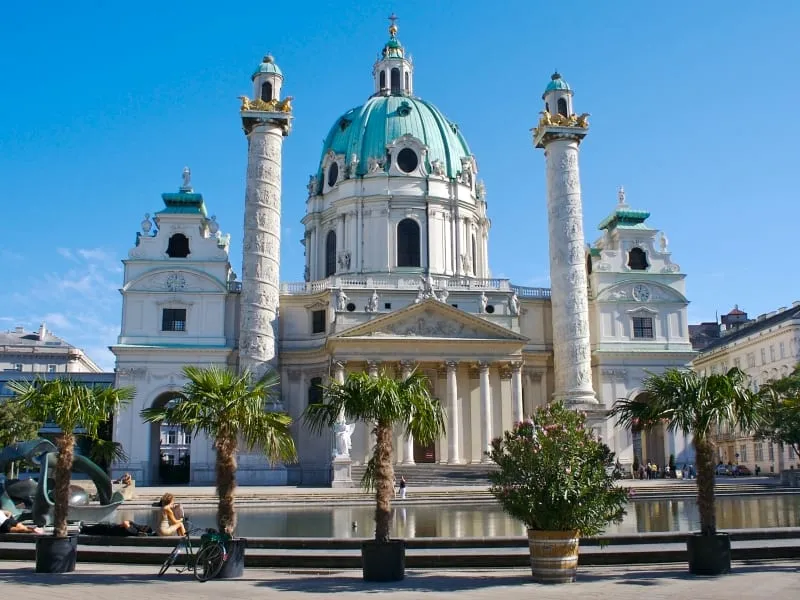
- The Karlskirche – 15 minutes’ walk away. A huge domed church flanked by two columns inspired by Trajan’s Column in Rome, built after the plague of 1713. It still dominates Vienna’s skyline.
Together they show how the ideas of absolute monarchy and the Counter-Reformation were turned into stone, marble and gold.
Walk 3: The Ringstrasse – the Empire’s Historicism
Time: about 1 h 30 min, with 30 minutes of walking (or ride trams 1 and 2, which circle the Ring).
In 1857 Emperor Franz Joseph ordered the medieval city walls to be torn down. In their place came a broad boulevard, the Ringstrasse, lined with buildings in every “historical” style.
- The State Opera – neo-Renaissance.
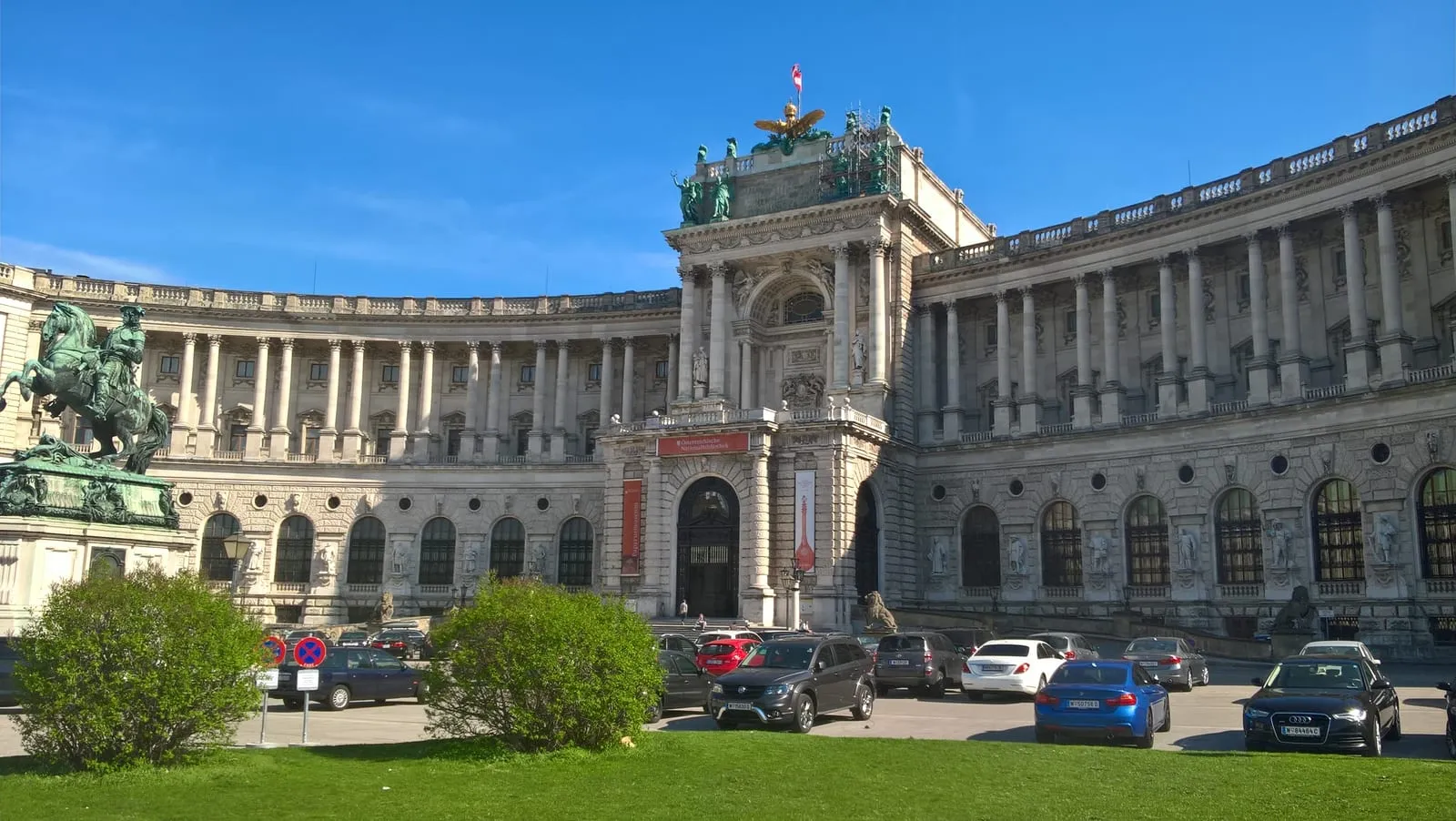
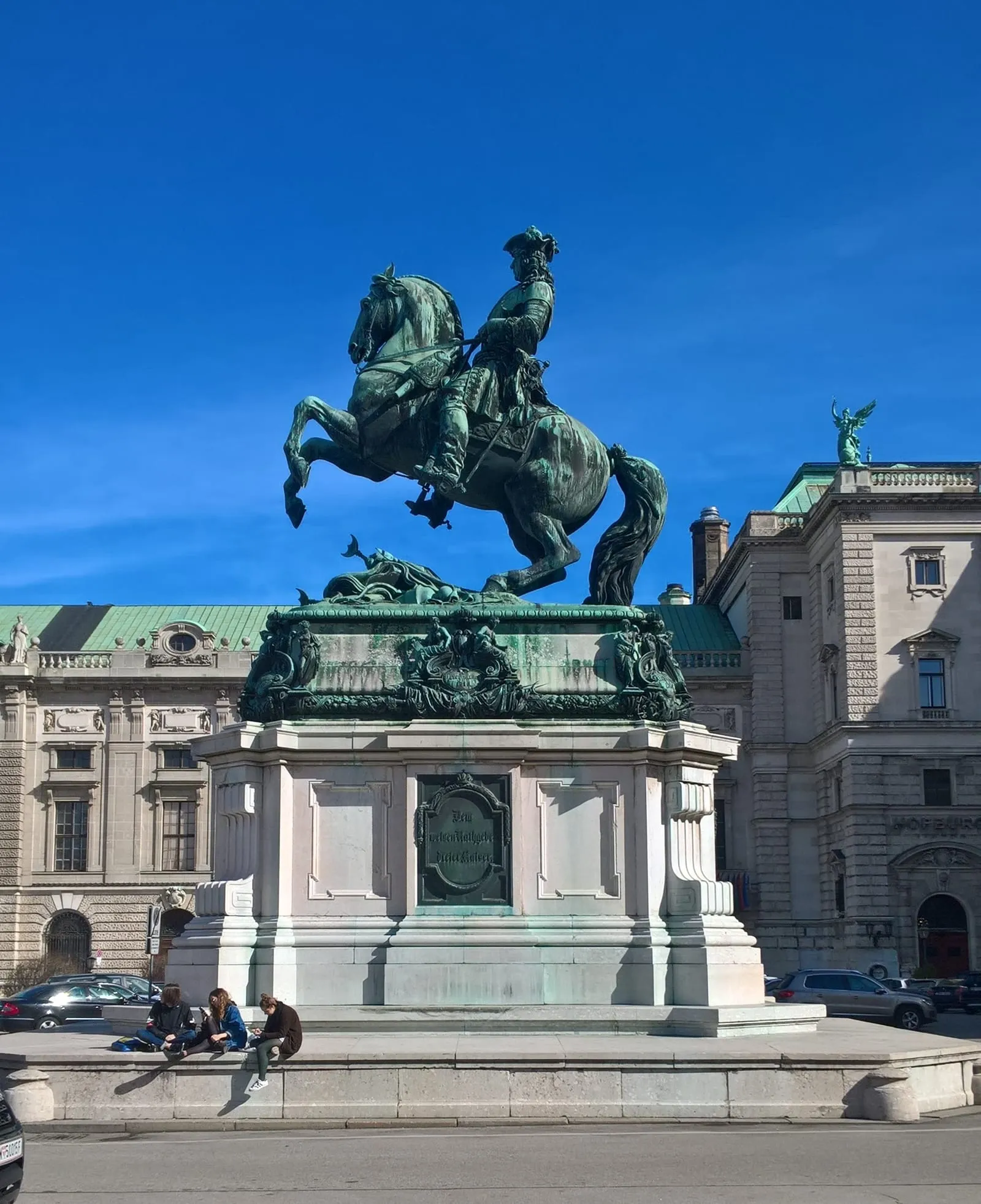
- The Hofburg and Heldenplatz – with equestrian statues of Prince Eugene and Archduke Charles.
- The Parliament – neo-Greek, with a statue of Pallas Athena, since democracy was born in Greece.
- The City Hall – neo-Gothic, the style of the free medieval cities.
- The University – neo-Renaissance, a temple of learning.
- The Burgtheater – opposite, neo-Baroque.
Each building’s style is a message: the new bourgeoisie that emerged after the revolutions of 1848 was showing off its values – education, law and culture.
Practical tips
- Wear comfortable shoes – Vienna is best explored on foot.
- Keep quiet in churches during services.
- The Vienna City Card gives discounts on the Belvedere and public transport.
- After your walk, rest in one of Vienna’s coffee houses.
See also our Vienna guide.
Photos
Travel tips
-
Travelling abroad with kids – when, where and how
A practical guide to travelling abroad with children – the right age, child-friendly cities, how to plan the route and what documents you need.
-
Vienna 1900 – Klimt, Schiele, the Secession, Freud and the Fools' Tower
A walk through fin-de-siècle Vienna – the Secession Building and the Beethoven Frieze, Otto Wagner and Adolf Loos, the Freud Museum and the Fools' Tower (Narrenturm).
-
Vienna for art lovers – the museums you shouldn't miss
Vienna's museums – the Belvedere and Klimt's The Kiss, the Kunsthistorisches Museum, the Albertina, the Leopold and Schiele, the Secession and the MAK. How to plan them.