Vienna 1900 – Klimt, Schiele, the Secession, Freud and the Fools' Tower
A walk through fin-de-siècle Vienna – the Secession Building and the Beethoven Frieze, Otto Wagner and Adolf Loos, the Freud Museum and the Fools' Tower (Narrenturm).
Around 1900, Vienna was one of the most exciting places in the world. Klimt, Schiele, Mahler, Schnitzler and Freud sat in its coffee houses. Psychoanalysis, modern architecture and “art for everything” were born here. At the same time, Franz Joseph’s empire was slowly fading, and the city was shaken by political conflict and anti-Semitism. The writer Karl Kraus called Vienna “the experimental laboratory for the end of the world”. Here’s a walk through “Vienna 1900”.
Karlsplatz – modernism’s manifesto
Start at Karlsplatz.
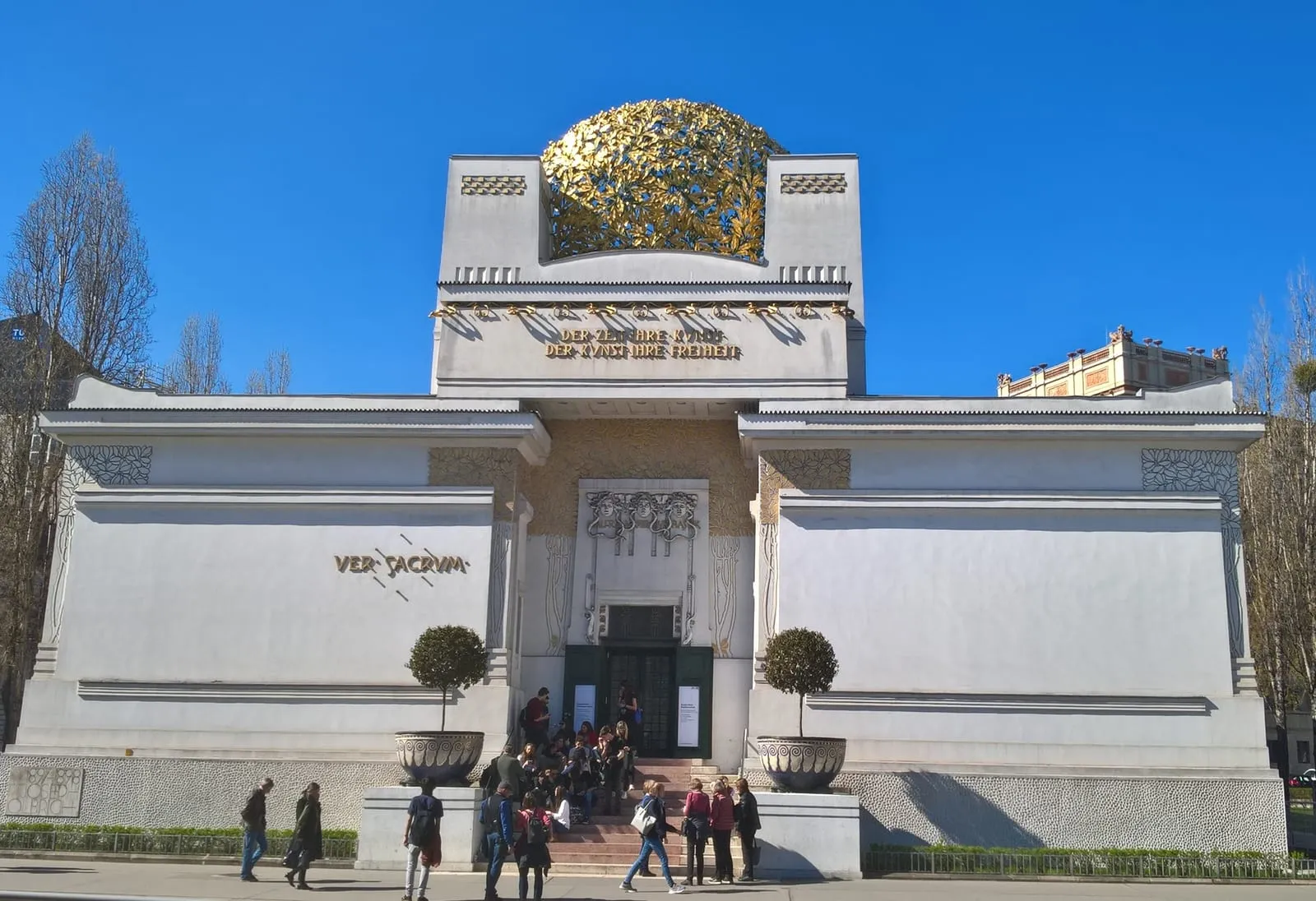
- The Secession Building (1898), with its dome of gilded laurel leaves. Above the entrance is the motto: “To every age its art, to art its freedom.” The building was conceived as a “total work of art” (Gesamtkunstwerk), uniting architecture, sculpture, painting and music. In the basement is Gustav Klimt’s Beethoven Frieze, a mural cycle inspired by Beethoven’s Ninth Symphony that weaves together Romanticism, Symbolism and Japanese influences.
- Otto Wagner’s city railway pavilions – green and white, with gilded sunflowers. Wagner was the leading architect of the Secession.
- Adolf Loos’s Café Museum (1899) – with clean, almost Cubist lines. Loos also wrote the famous essay “Ornament and Crime”.
The Looshaus and the Emperor
On Michaelerplatz, directly opposite the entrance to the Hofburg, is the Looshaus (1910), with a smooth facade free of any ornament. The story goes that Emperor Franz Joseph disliked it so much that he stopped using that entrance to his palace. Someone who saw beauty in Baroque grandeur could hardly appreciate Loos’s functionalism.
The Freud Museum
At Berggasse 19 is the apartment where Sigmund Freud lived and worked from 1891 until 1938, when he was forced to emigrate to London after Austria was annexed by Nazi Germany. He wrote The Interpretation of Dreams here. Today it’s a museum, with his waiting room, study and photographs of the era.
The Fools’ Tower (Narrenturm)
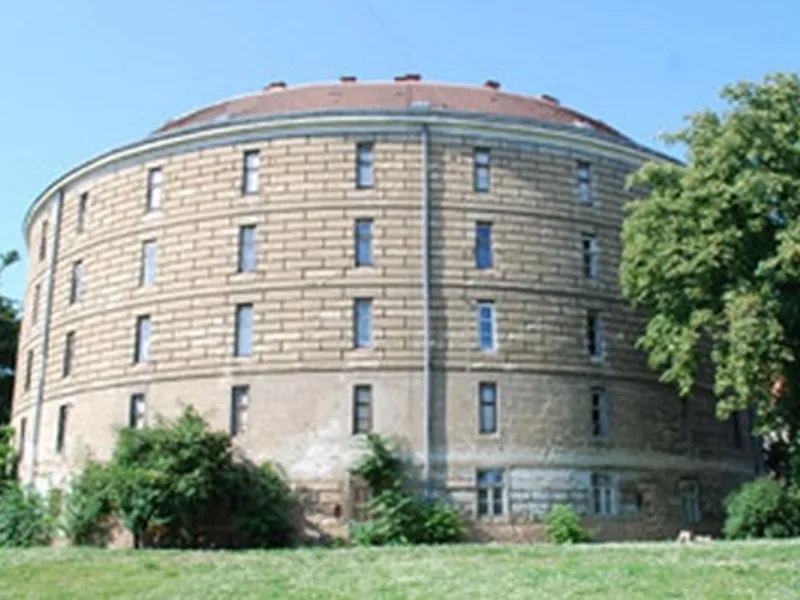
About 15 minutes’ walk from the Freud Museum, in the courtyard of the old General Hospital, is the Narrenturm (“Fools’ Tower”). It was built in 1784 under Emperor Joseph II as one of the first hospitals in Europe devoted solely to the mentally ill. The round, five-storey building with 139 cells looks more like a prison than a hospital. Its story shows how ideas about madness changed over the centuries – a subject the philosopher Michel Foucault explored in Madness and Civilization. Today the tower houses the Pathological-Anatomical Museum.
The Leopold and the Belvedere
End with the paintings of Schiele, Klimt and Kokoschka at the Leopold Museum, or at the Upper Belvedere with The Kiss. See Vienna for art lovers.
More from the era
- Otto Wagner’s Postal Savings Bank – aluminium bolts and a glass roof.
- The Church of St Leopold (Am Steinhof) – Wagner’s masterpiece at the Steinhof psychiatric hospital.
- Café Central and Café Landtmann – see Vienna’s coffee houses.
Practical tips
- The Narrenturm has limited opening hours – check before you go.
- The Freud Museum is small – an hour is enough.
- The whole walk takes about half a day, using public transport between sections.
Photos
Travel tips
-
Travelling abroad with kids – when, where and how
A practical guide to travelling abroad with children – the right age, child-friendly cities, how to plan the route and what documents you need.
-
Three architecture walks in Vienna – from Gothic to the Ringstrasse
Self-guided architecture walks in Vienna – St Stephen's and the Baroque churches, the Belvedere and Karlskirche, and the Ringstrasse from the Opera to the City Hall.
-
Vienna for art lovers – the museums you shouldn't miss
Vienna's museums – the Belvedere and Klimt's The Kiss, the Kunsthistorisches Museum, the Albertina, the Leopold and Schiele, the Secession and the MAK. How to plan them.