Travelling solo – how to plan an independent trip abroad
A complete guide to independent travel – choosing a destination, preparing, flights, trains and buses, where to stay, getting around and what not to forget.
“Every train has its passengers,” goes the Bulgarian saying. Some people can’t imagine a trip that isn’t an organised tour; others believe the only way to truly experience a place is on your own. Independent travel takes more preparation, but it gives you the freedom to see exactly what you want at your own pace. Here’s how to organise it step by step.
What holds us back
- Language. Few people abroad speak Bulgarian. But English gets you almost everywhere in Europe, and translation apps (including camera translation for menus and signs) solve most situations.
- Hesitation. When you travel alone, the trip is exactly as organised as you make it. You’ll travel if you have a ticket, sleep if you have a booking, and get into the museum if you checked it isn’t closed that day. The more carefully you prepare, the calmer the trip.
- Food. It’s hard at first to find your way around an unfamiliar cuisine and price level. The fix: check online reviews and eat where the locals eat.
Choosing a destination
It all starts with an idea: “I want to drink beer in Prague.” But if that’s the only goal, it’s a one-day trip. So:
- Get a detailed guidebook or read a few online. You’ll discover what else there is and choose what really interests you.
- Think about the surroundings – there’s almost always a great day trip nearby. From Prague, for example, Karlštejn Castle or Kutná Hora are easy to reach.
- Check events – festivals, knights’ tournaments, concerts, Christmas markets. They can become the highlight of the trip.
- Consider the climate – the south heats up earlier and harder; Italy and Spain in July and August can be exhausting. Up north, the cold arrives earlier than in Bulgaria.
- Start closer to home. Make your first solo trips within Europe, then go further afield.
- Check safety – avoid conflict zones and follow your foreign ministry’s travel advice.
Transport – how to travel for less
One rule: the earlier you buy, the cheaper the ticket.
- Planes – low-cost airlines fly from Sofia, Varna and Burgas to dozens of cities. Watch out for baggage and seat fees, and compare prices on flight-search sites and apps.
- Trains – in Western and Central Europe, trains are fast and comfortable, and early high-speed tickets are often far cheaper. Consider Interrail if you’re touring several countries.
- Buses – the cheapest but most tiring option. Read reviews of the operator before you buy.
- Car – freedom, but also responsibility. Get the car checked before a long drive, check vignettes and toll rules in each country, and carry the compulsory kit (high-visibility vest, warning triangle, first-aid kit).
Where to stay
- Hotels – usually central, with breakfast, cleaning and help at reception. Downsides: price and small rooms, and no kitchen for longer stays.
- Rental apartments – especially good value for families and longer stays, with a kitchen and more space. Check reviews and the exact location.
- Hostels – the cheapest, often central, with shared kitchens. Many also have private rooms. Great for young travellers and meeting people.
- Campsites – a cheap option if you’re driving and equipped, usually outside town.
- Location matters most – a pricier room in the centre often works out cheaper than a budget one outside town once you add transport and lost time.
Getting around and money
- Hop-on hop-off buses are handy for a first orientation but expensive if you want to explore properly.
- Public transport is cheaper and more flexible. Get a day, three-day or weekly pass – it’s far better value over several days.
- City cards (City Card, Pass) combine transport and museum entry.
- Taxis – expensive in Western Europe. Use ride-hailing apps with an upfront price.
- Money – cards are accepted almost everywhere, but carry a little cash. When paying by card abroad, choose the local currency, not your home currency, at the terminal.
Don’t forget
- Documents – ID card or passport (check validity), with copies on your phone.
- Health insurance – the European Health Insurance Card (EHIC) plus travel insurance.
- Mobile data – in the EU, roaming is like at home; outside the EU, check your tariff. See Mobile data abroad.
- Offline maps and local transport apps.
- Plug adapter – for the UK, Ireland, Malta and Cyprus.
- Emergency number 112 – works across the EU.
Travelling with children? See Travelling abroad with kids.
Travel tips
-
Travelling abroad with kids – when, where and how
A practical guide to travelling abroad with children – the right age, child-friendly cities, how to plan the route and what documents you need.
-
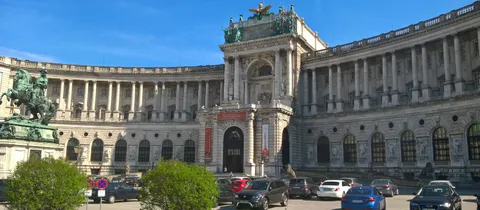
Three architecture walks in Vienna – from Gothic to the Ringstrasse
Self-guided architecture walks in Vienna – St Stephen's and the Baroque churches, the Belvedere and Karlskirche, and the Ringstrasse from the Opera to the City Hall.
-

Vienna 1900 – Klimt, Schiele, the Secession, Freud and the Fools' Tower
A walk through fin-de-siècle Vienna – the Secession Building and the Beethoven Frieze, Otto Wagner and Adolf Loos, the Freud Museum and the Fools' Tower (Narrenturm).